Seams and punctures
Separate a local opening from widespread seam deterioration. A repair needs suitable adjoining material and the correct preparation for that membrane.
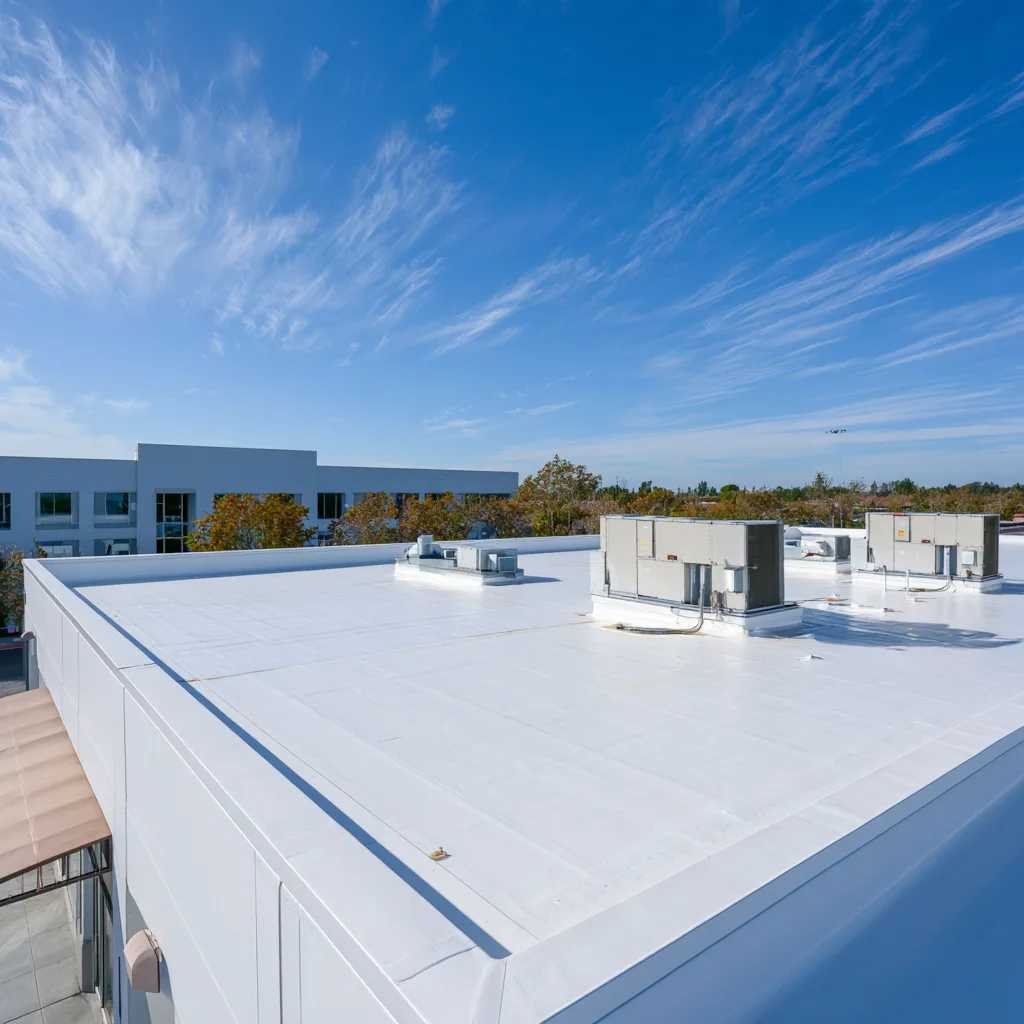
Trace leaks and drainage problems across low-slope roofs, from the membrane to the edge details.
Water can move along a deck, between layers or around insulation joints before it appears indoors. A drip beside a light fixture may originate farther away at a seam, curb or perimeter detail.
For a Bentonville commercial flat roof, the investigation starts with the leak history and the roof assembly. It should establish whether the defect is localized and whether the layers beneath it remain serviceable. A surface patch is not enough when the material underneath also needs repair.
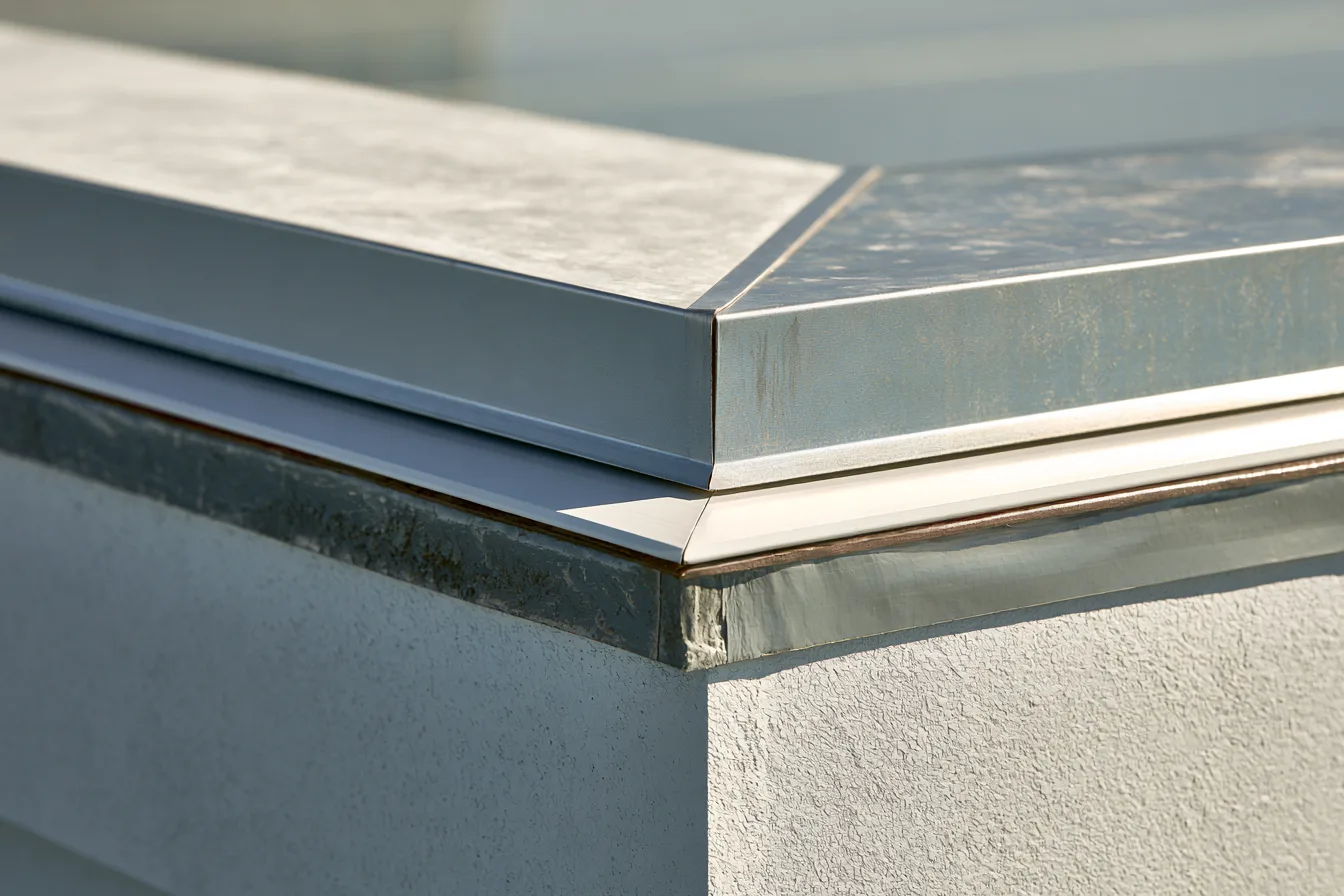
The membrane field matters, but roof interruptions provide additional paths that need to be checked.
Separate a local opening from widespread seam deterioration. A repair needs suitable adjoining material and the correct preparation for that membrane.
Inspect changes in plane, corners, terminations and work by other trades. A new pipe or moved unit can change a previously sound connection.
Flashing at the perimeter and at outlets must connect into the roof system. Loose edges and blocked drains require more than a patch at the indoor drip.
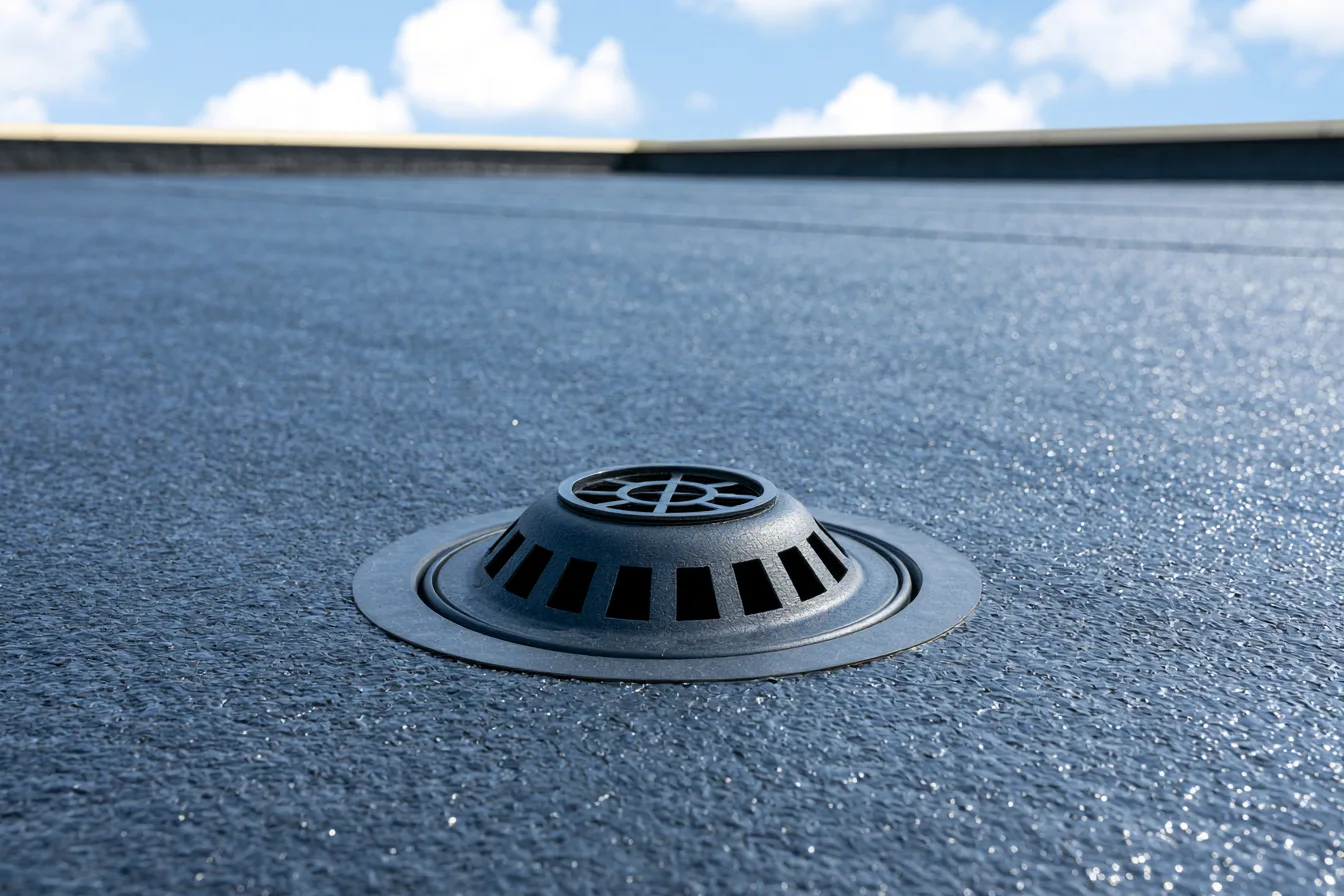
A drain needs a clear collection area, an open inlet and a working route through the building’s drainage system. Debris at the dome is a different issue from a failed membrane connection at the drain or a restricted pipe below it.
Ponding should be evaluated with the roof design, recent rainfall and manufacturer requirements in mind. Correcting it may require drainage work, tapered insulation or other changes beyond the immediate leak repair. A coating does not create slope.
These conditions can turn a local repair into an assembly or capital-planning question.
A larger finding can lead to TPO replacement planning or another suitable roof system. It should be explained before the scope is expanded.
Water retained in layers or moving along an assembly can arrive indoors later than the rainfall. That timing is useful evidence, but it does not locate the opening by itself.
No. TPO, PVC, EPDM, modified bitumen and coatings need compatible materials and preparation. Identifying the existing system is part of defining the repair.
Difficult access, work around equipment, hidden wet insulation, damaged support and complex flashing can all expand the scope. The size of the ceiling stain is not a measurement of the roof area that needs work.
Only if the roof is a suitable restoration candidate and the defects are correctly repaired as part of that system. The roof coatings page explains why wet layers and drainage failures need a different answer.
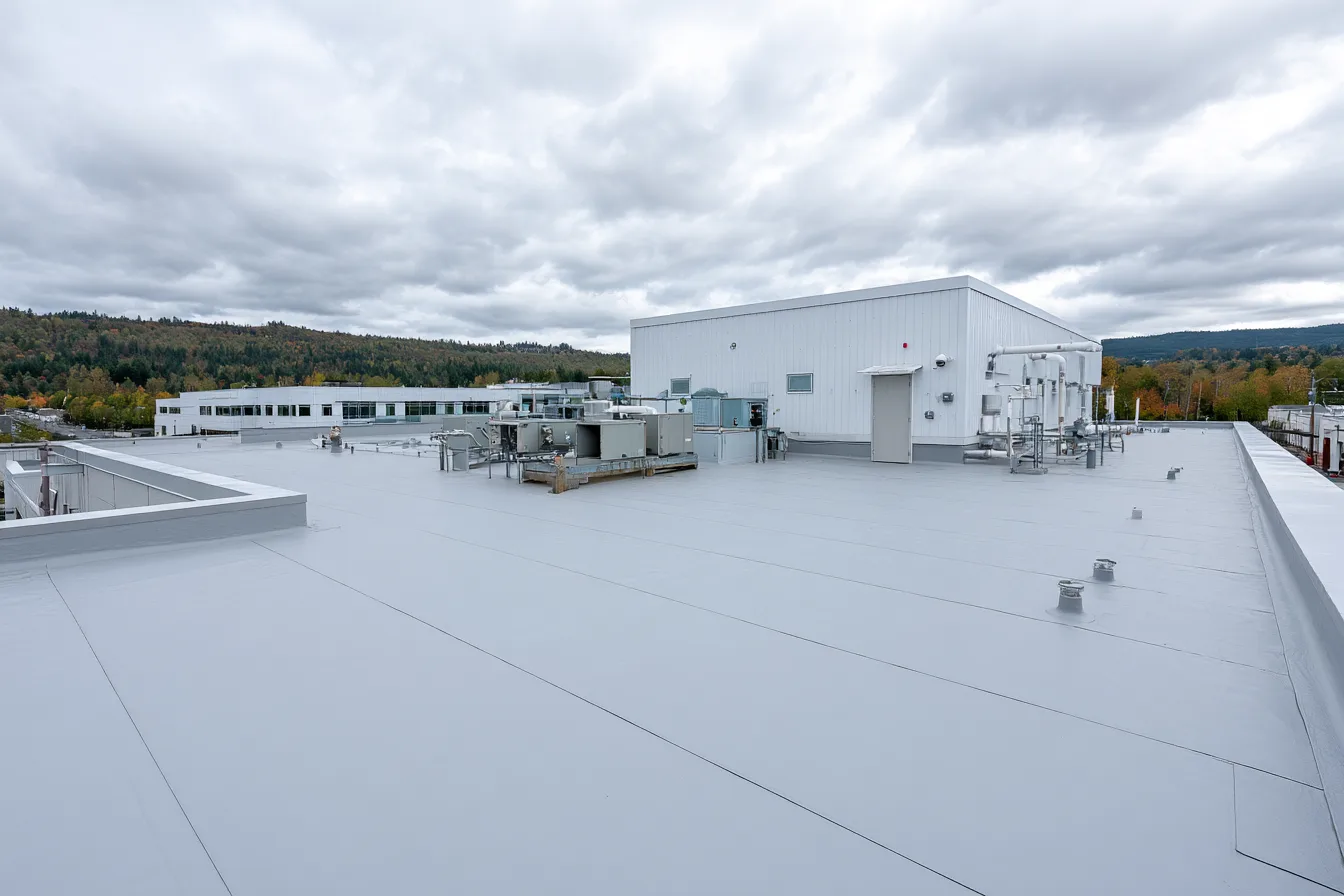
Describe where the leak appears, the roof type if known and how the building is used. Request a free inspection to establish the repair direction.