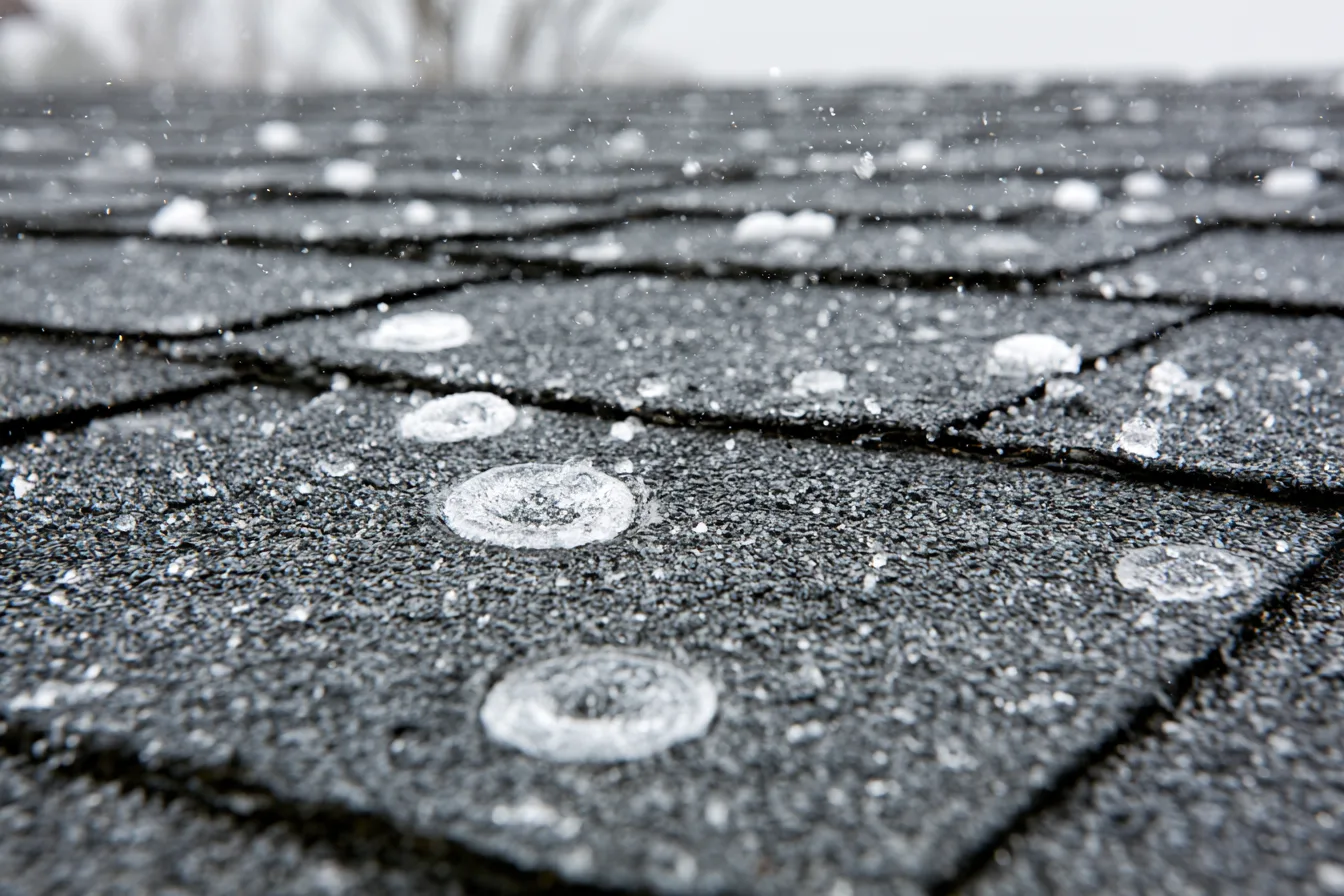
Hail impacts
Impacts can dislodge granules or damage the shingle beneath them. The inspection needs to distinguish impact effects from ordinary wear, blisters and other surface marks.
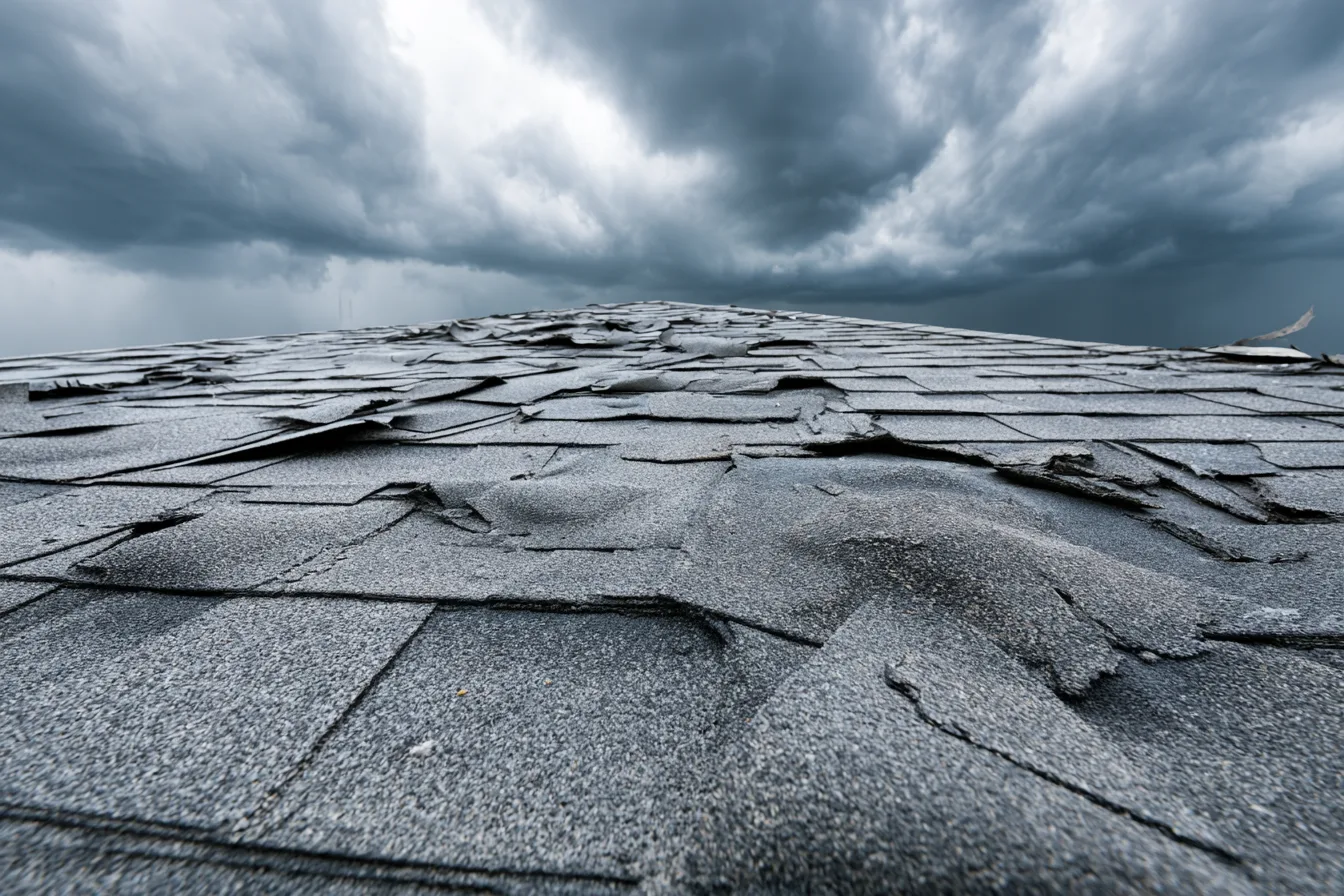
Address missing shingles, suspected hail damage and leaks after severe weather with a roof inspection.
Missing roof material and active leaks deserve prompt attention. Keep clear of damaged ceilings, fallen branches and electrical hazards. If belongings can be moved safely, protect them while the roof concern is being addressed.
Tell us whether water is entering now, where it is appearing and whether the roof has visible openings. A roofer can discuss safe access and temporary protection, then establish the permanent repair. A storm date helps describe the concern; it does not prove the cause of damage at your property.
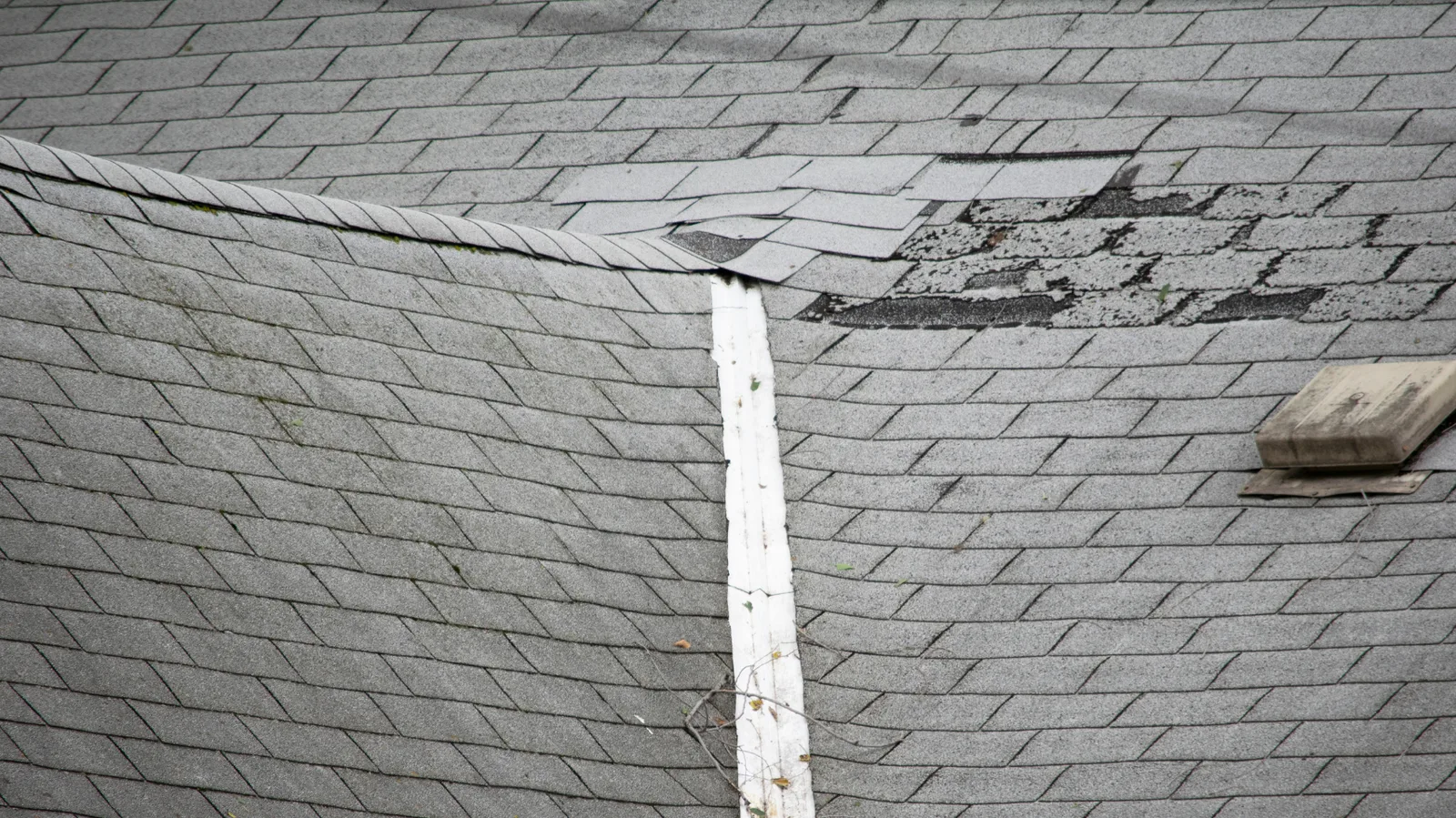
Weather can affect the covering and the details around it in different ways. Ground-level observations are useful, but marks alone are not a roof diagnosis.
Impacts can dislodge granules or damage the shingle beneath them. The inspection needs to distinguish impact effects from ordinary wear, blisters and other surface marks.
Wind can lift or remove shingles and disturb edge or flashing details. Material that remains in place may still need its connection checked.
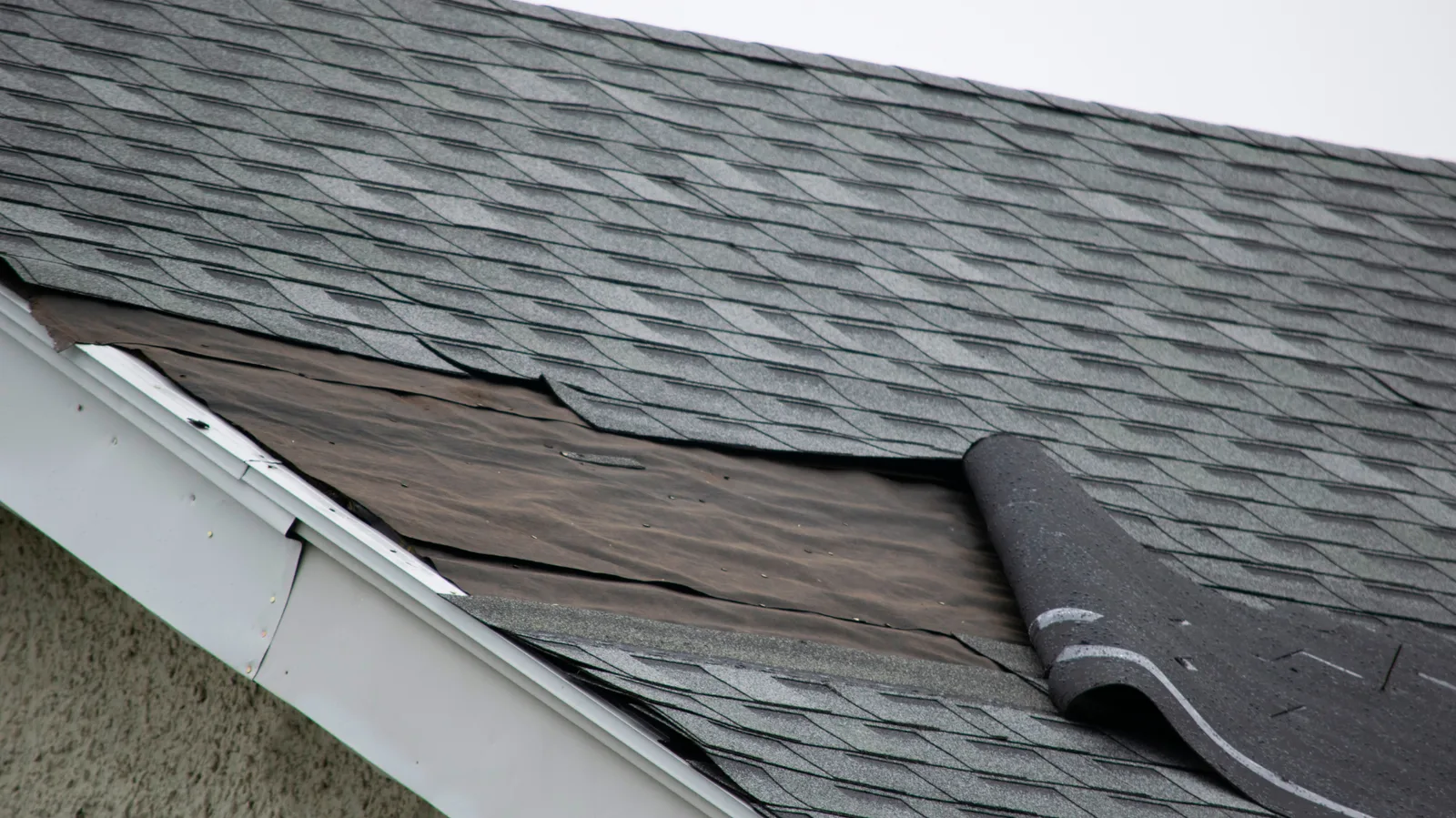
The roof needs a physical repair scope. The insurer separately determines coverage under the policy.
Photograph visible effects only from a safe location. Retain receipts for necessary temporary protection and describe the event and the active concern.
An inspection identifies the affected material and the neighboring condition. A permanent repair may differ from the temporary covering.
The insurer reviews the claim, deductible, exclusions and payment terms. A repair recommendation is not a promise that the policy will pay.
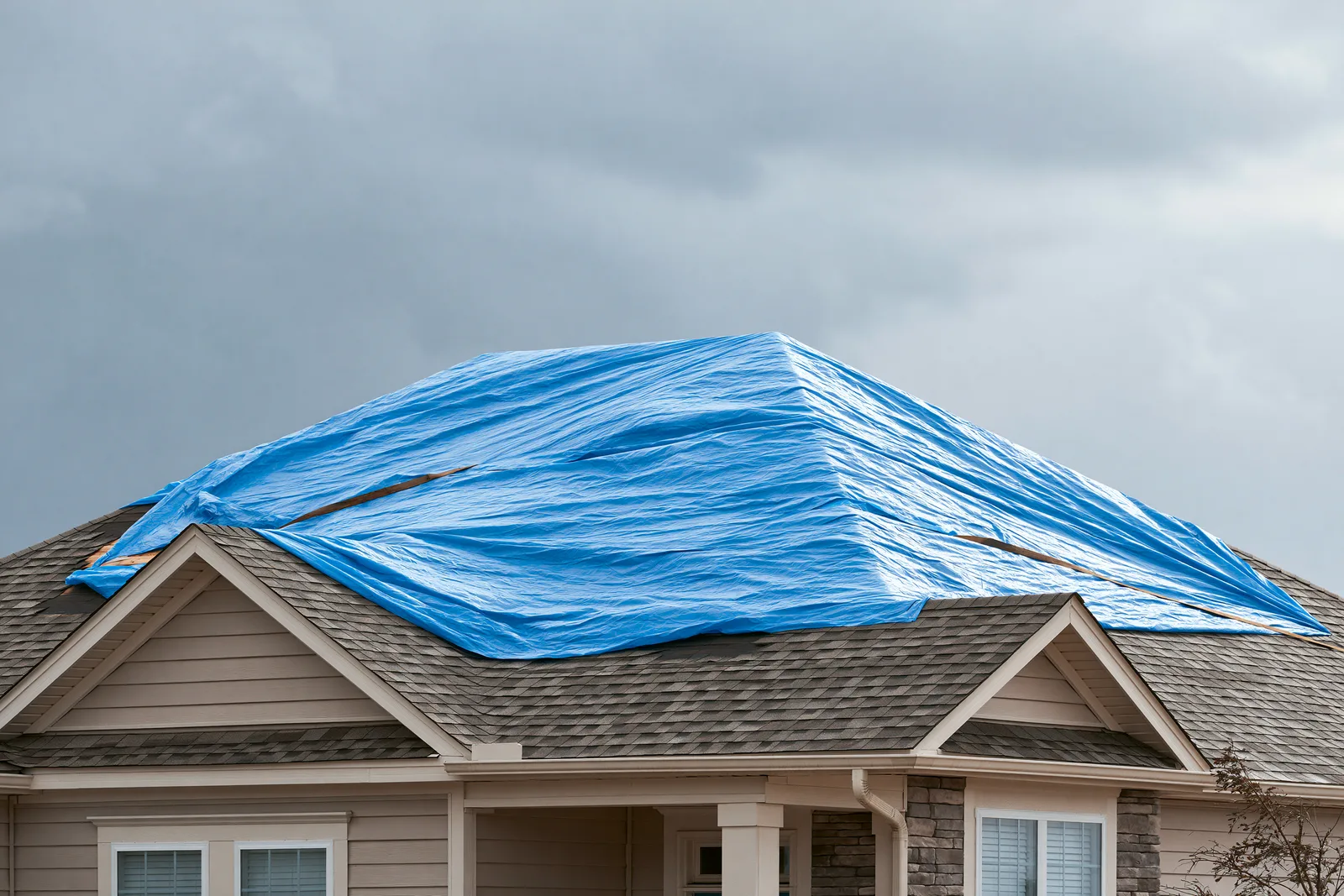
Temporary covering is intended to limit further entry until permanent work can be done. It needs safe access and a secure arrangement that accounts for roof condition and weather. A loose covering can move or create another hazard.
It does not replace damaged decking, restore a flashing connection or settle whether the remaining roof is sound. Keep the temporary scope and permanent repair separate when the work is discussed.
Start with the actual damage and your policy. The Arkansas Insurance Department advises having the roof inspected and considering the damage relative to the deductible. The insurer decides coverage; ordinary aging is a different issue from a covered sudden event.
Policy terms can allow an initial payment based on actual cash value, with depreciation handled separately when eligible work is completed and documented. Your deductible and exclusions still apply. Confirm the exact payment stages and deadlines with the insurer rather than treating a roof estimate as the claim settlement.
Yes. A connection can be lifted or damaged without an entire shingle blowing away. Conversely, surface marks do not by themselves prove functional storm damage. The roof needs inspection.
No same-day or around-the-clock crew availability is represented here. Describe an active leak clearly when requesting contact so the urgency and available help can be discussed. For immediate danger, use the appropriate emergency service.

Tell us what happened and whether water is entering now. Request a free inspection to understand the roof work that is needed.